
Introduction to Enterprise AI in Africa
Africa is undergoing a digital transformation, and at the heart of it lies enterprise AI Africa. From Lagos to Nairobi, Cape Town to Cairo, businesses are embracing artificial intelligence to streamline operations, enhance customer experiences, and create new revenue opportunities.
But what exactly does enterprise AI mean, and how does it connect with Africa’s fast-growing digital economy?
In simple terms, enterprise AI refers to the large-scale use of artificial intelligence across business operations. Unlike everyday consumer AI tools such as virtual assistants, enterprise AI integrates directly into organizational systems—driving efficiency across industries like finance, retail, healthcare, agriculture, and logistics.
What makes Africa uniquely positioned for this shift? The continent’s young population, mobile-first approach, and thriving startup ecosystem create an ideal environment for AI innovation. The African Union’s Digital Transformation Strategy (2020–2030) even highlights AI as a cornerstone for inclusive growth and economic empowerment.

Definition of Enterprise AI
Enterprise AI is all about scaling AI within organizations to enable automation, predictive insights, and smarter decision-making across different departments. This involves technologies like:
-
Machine Learning (ML): Recognizing patterns in data to predict outcomes.
-
Natural Language Processing (NLP): Understanding and interpreting human language.
-
Computer Vision: Analyzing images and video for insights.
-
Predictive Analytics: Forecasting trends in sales, markets, and supply chains.
Across Africa, these capabilities translate into real-world solutions such as AI-powered micro-lending, precision healthcare, crop yield prediction, and tailored e-commerce experiences.
Why “Enterprise AI Africa” Matters in Today’s Economy
Africa’s tech sector is booming, and AI is at the center of it. The continent’s AI market is expected to expand by over 30% annually from 2023 to 2030, fueled by industries like fintech, agriculture, and e-commerce.
Some notable examples:
-
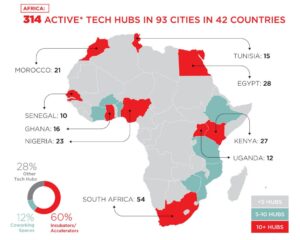
Fintech: Nigeria and Kenya are leaders in AI-driven digital banking and microfinance.
-
E-commerce: Platforms like Jumia rely on AI for personalization and logistics.
-
Healthcare: Startups in South Africa and Rwanda are using AI to improve diagnostics.
-
Agriculture: AI in Kenya and Ghana helps farmers increase yields and reduce risks.
In essence, enterprise AI is not just a tool for efficiency—it’s a catalyst for tackling Africa’s most pressing challenges, from food security to financial inclusion.
Difference Between AI and Enterprise AI
Traditional AI vs Enterprise AI
While AI refers broadly to any machine simulating human intelligence, enterprise AI applies these technologies at scale within businesses.
-
Traditional AI Example: A chatbot that answers simple customer queries.
-
Enterprise AI Example: A chatbot integrated with ERP and CRM systems that not only answers questions but also updates records, processes transactions, and initiates workflows

Key Features of Enterprise AI
-
Scalability – Extends across departments and functions.
-
Integration – Connects with core systems like ERP, CRM, and supply chains.
-
Data Governance – Ensures compliance with regulations and privacy.
-
Predictive Insights – Provides actionable forecasts for leaders.
What Does Enterprise AI Do?
Automating Operations
In many African businesses, manual processes are expensive and slow. AI cuts costs and time by automating fraud checks, document verification, and customer onboarding.
Enabling Smarter Decisions
With the ability to process millions of data points instantly, AI helps organizations predict sales, optimize inventory, and identify risks far quicker than traditional methods.
Enhancing Customer Experience
From personalized e-commerce recommendations to AI-driven telecom support, African businesses are boosting loyalty and engagement through tailored customer journeys.
What is Enterprise AI Used For?
Banking & Financial Services
Africa’s fintech sector is booming, and AI is powering:
-
Credit Scoring: Platforms like Branch and Tala help
-
unbanked customers access credit.
-
Fraud Detection: South African banks use AI to flag suspicious activity.
-
Onboarding: KYC checks are automated for faster customer service.
Healthcare

-
AI tools are helping doctors detect illnesses early.
-
Zipline in Rwanda leverages AI-powered drones to deliver medical supplies.
-
Virtual AI assistants are being used for patient triage.
Retail & E-commerce

Platforms such as Jumia rely on AI for:
-
Personalized shopping recommendations.
-
Accurate demand and inventory forecasting.
-
Optimized last-mile delivery.
Agriculture & Food Supply
Farmers in Kenya detect crop diseases early with AI.
-
AI drones monitor soil and crop health.
-
Predictive models help forecast weather and reduce losses.
Case Study: Domino’s Enterprise AI Platform
What Sets Domino’s Apart
Domino’s uses AI to forecast demand, manage deliveries, and improve customer engagement.
Lessons for Africa
African e-commerce and food delivery businesses can learn from Domino’s by applying similar AI tools to tackle last-mile delivery challenges.
Enterprise AI Agents Explained
What Are AI Agents?
Enterprise AI agents are autonomous systems that perform specific business tasks without constant supervision.
Examples in Africa
-
Telecoms: Chatbots handling millions of customer inquiries.
-
Banking: Fraud detection systems working around the clock.
-
Retail: AI agents predicting demand and managing inventory.
Challenges of Enterprise AI in Africa
Infrastructure Gaps
Limited internet access and inconsistent electricity still hinder large-scale adoption.
Talent Shortages
There’s a lack of skilled AI engineers, but programs like AI4D Africa are building capacity.
Ethical & Regulatory Concerns
Issues like data privacy, bias, and unclear policies pose significant risks.
Future of Enterprise AI Africa
AI as an Economic Driver
According to PwC, AI could add $15.7 trillion to the global economy by 2030, with Africa positioned to benefit significantly if adoption keeps growing.
How Businesses Can Prepare
-
Invest in AI literacy and workforce training.
-
Explore cloud-based AI solutions for scalability.
-
Build strong data governance frameworks to ensure ethical use.
FAQs on Enterprise AI Africa
Q1. What does Enterprise AI do?
It automates workflows, supports better decisions, and enhances customer engagement.
Q2. How is Enterprise AI different from regular AI?
AI covers all machine intelligence, while enterprise AI is built for large-scale business operations.
Q3. What are enterprise AI agents?
They’re autonomous systems that perform specialized business tasks like fraud detection or logistics optimization.
Q4. Which industries in Africa use Enterprise AI?
Banking, healthcare, agriculture, and retail are leading adopters.
Q5. Is Enterprise AI expensive for African companies?
While it can be costly, cloud-based solutions are making it more affordable.
Q6. Can small businesses use Enterprise AI?
Yes. SMEs can use AI-powered CRMs, chatbots, and data analytics without needing huge budgets.
Conclusion
The rise of enterprise AI Africa is not just another tech buzzword—it’s a practical solution to some of the continent’s biggest challenges. From fintech in Nigeria to agriculture in Kenya, AI is transforming industries, creating new opportunities, and advancing economic inclusion.
Yes, infrastructure and regulation challenges exist, but the potential benefits far outweigh the risks. With smart adoption strategies, African businesses can leapfrog older development models and become global leaders in AI-driven transformation.